Penumbra: Overture Throwback Review (2007)
Introduction:
In 2010, thirteen-year old me would often watch Let’s Play series of games I either couldn’t afford, or wasn’t convinced to spend money on. One game took over the entirety of YouTube- Amnesia: The Dark Descent. I don’t think it can be overstated how much we owe to that first Amnesia title. The survival-horror genre pretty much died with the birth of the seventh generation. There were a few rare exceptions like Condemned: Criminal Origins and Dead Space, but other than a handful, the genre was put to rest. And the long running icons of horror, Resident Evil and Silent Hill, were both in the lowest points of their history. Amnesia: The Dark Descent reminded the gaming world of the value of slow paced and atmospheric horror. A few years later and the world would receive the likes of Outlast, Alien: Isolation, P.T, and Resident Evil 7. Horror gaming was revived. And a lot of that is thanks to Frictional Games’ seminal 2010 title.
Don’t be fooled by how I’m speaking on Amnesia though- I haven’t played much of it myself. In fact, other than a brief fling with The Dark Descent and SOMA, I’m quite unfamiliar with Frictional Games’ catalogue. So I’ve decided to change that. Please, join me in a trip back 19 years ago to 2007. Let us revisit the first Frictional title:
Presentation:
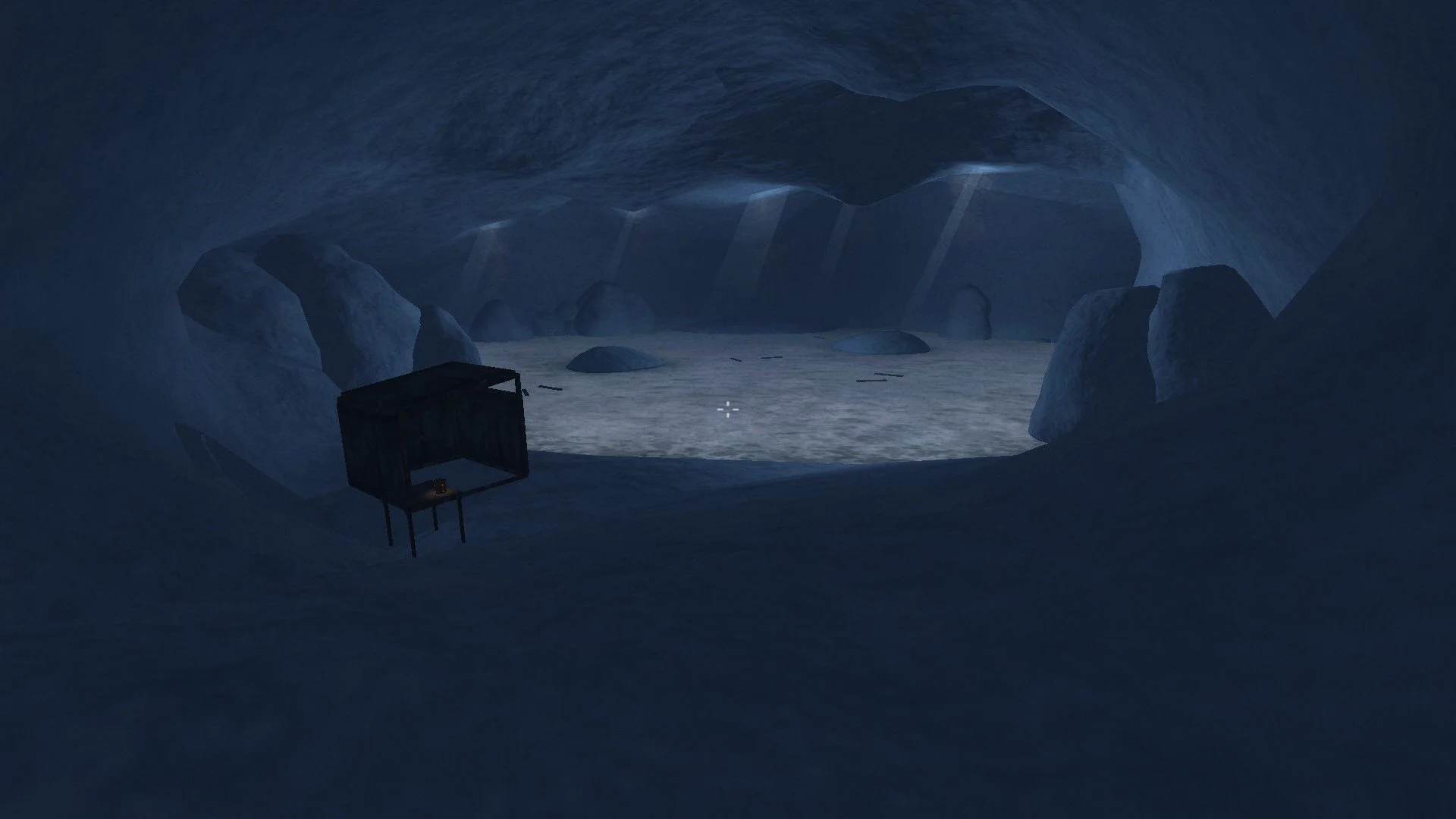
Perhaps because it was the time of my most formative gaming, but the graphics of this seventh-gen era really feel like home to me. This might be a hot take to some, but I really don’t think graphics needed to get much better than this. Penumbra: Overture does a great job at pulling the player into its dusty, dark, and claustrophobic mining facility. We spend roughly two to three minutes outdoors throughout this five hour adventure. The majority of our time will be spent amongst rocks, huge metallic behemoths meants to drill said rocks, and disturbing creatures.
There were multiples times I stopped to take a screenshot; specifically in the very industrial sections of the game. It oftentimes felt like one very long and disturbing Half-Life level.
I particularly enjoyed being able to right=click on almost every object in the game and get a small sentence describing how the protagonist, Philip, perceived or felt about each object.
This might give you the impression that I enjoy reading long exposition dumps during my gaming sessions. Well…I don’t. Penumbra: Overture sadly suffers from what I call “Bro should’ve wrote a book” syndrome. In classic survival horror fashion, the player will find notes scattered about. Instead of being one paragraph or shorter like in the old Resident Evil and Silent Hill games, the notes in Penumbra can often span 2-3 pages. Not only does this feel like a pace breaker, but it also highlights the oil and water relationship video games repeatedly have with their narratives. When you have pages and pages of exposition dumps, it feels like the developer is saying “This is the easiest way to convey the story rather than seamlessly putting it into the experience of playing our game.” Another 2007 game, Bioshock, opted for audio-diaries and environmental storytelling. Audio diaries wouldn’t make sense in Penumbra, but I would’ve liked to see more effort into letting the locations tell the story. We do get a bit of that at certain points though.
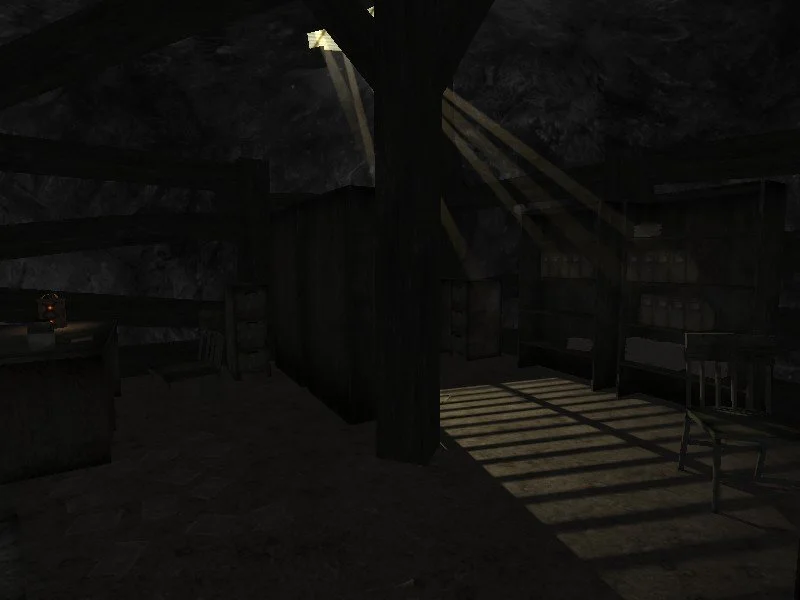
Ahhh, I love my cozy games.
Gameplay:
Being a preginator to Amnesia, Penumbra doesn’t ask the player to partake in almost any combat. Instead, the player will be crouching and sneaking around enemies. When they’re not doing that, they need to explore, gather items, and figure out some realtively simple puzzles.
I have to commend Penumbra for not often pushing me into the classic survival horror hole of “Wait what am I supposed to do with these items?!” The icon of this issue is the six-pack of juice in Silent Hill 2. The only time Penumbra got close to that was when it required me to use a saw meant for cutting wood on a non-wooden object. But still, it’s something I probably should’ve thought of rather quickly. When you strip back the oppressive sound design and visuals, most horror games feel like first cousins of point-and-click puzzle games. So it’s important that the puzzles feel good. And they do here.
My least favorite aspect of Overture was its strange mouse controls. It felt like I was playing an emulated Wii game with the mouse replicating the Wiimote. For example, instead of just clicking on a cabinet door to open it, the player needs to hold the button and move their mouse in an opening-like motion. Same thing applies to opening doors and swinging a weapon. It’s awkward, annoying, and unintuitive. It’s at its worst when you do get into combat, as most enemies are much smaller and lower than you (dogs and spiders). So you need to look downwards and goofily swing your weapon about. I understand that they were trying to go for a heavy and physics-based feel, but it doesn’t work. The only time the physics felt good was during what I dub “Half-Life-like” puzzles. Pushing barrels to uncover an air vent, stacking blocks to jump over an electrical barrier- stuff like that. It helps make the world feel more alive and real when you need to manipulate your environment.
Since Frictional is well known for forcing the player to feel powerless as they tip-toe around enemies, surely that must mean there is a vicious stalker enemy in this game, no? Not really. The only enemies you need to sneak around are these vicious dogs. Other than the dogs, there’s some speedy spiders and giant slug-like beasts you need to outmaneuver. You can easily play this game without partaking in combat.
If I’m sounding harsh on Penumbra: Overture, I truly don’t mean to. The enemies were an incredibly minor part of the overall game. You’re mostly soaking in the eerie and abandoned atmosphere and trying to find your way out. Most of my favorite three-dimensional games allow me to gaze upon wonderful, horrifying (or both), and mesmerizing locations. While I wouldn’t put Overture up with the likes of Ico or Silent Hill 3, I still think the atmosphere is the best aspect of the game.
Story:
You play as Philip Buchanan, a man who has just lost his mother. Philip is physicist, which can sometimes play into his keen observations. After his mothers funeral, he receives a letter from his deadbeat father who abandoned him as a child. With the letter came some instructions which ask Philip to go to a certain bank and destroy documents in a safety deposit box. Owing his father nothing, Philip finds the documents and asks a colleague to examine them. The colleague decodes some coordinates in Greenland, to which Philip goes.
Due to the bitter and life threatening cold, Philip takes shelter in a mine. He quickly discovers that something horrible occurred here. Via a handheld radio, he gets abstract instructions from a man gone semi-mad named Red. Red serves as a far less interesting Atlas from Bioshock, but is still the most interesting character in the game.
It’s worth noting that Overture was planned (and is) the first chapter of a trilogy. So Philip’s story feels like its barely gotten started in this game. If you pick up Overture expecting a full story like Silent Hill 2, you’ll be disappointed. But because of the short playtime of this game (4-5 hours) I don’t find it too egregious to ask the player to play the now dirt cheap sequels for more backstory and lore. As of the time of writing, you can get all of the Penumbra games for less than the price of a bean burrito from Taco Bell.
While I do hope that the future games rely less on essays scattered around its world for exposition, I am interested in where the story is going.
Conclusion:
Every now and then I have the pleasant experience of sifting through my Steam backlog, downloading a game I forgot I bought, and falling in love with it. Penumbra: Overture is that pleasant experience. I’m already almost two hours into its sequel, Black Plague (which I will also review).
Overall, I loved Penumbra: Overture.
(In an effort to move away from traditional numerical scores, I will use the following metric: Hated, Disliked, Felt Neutral, Liked, Loved, Can’t Stop Thinking About)