Too Easy to Be Great? | Onimusha: Way of the Sword
Depending on who you ask, third-person action games have never been better. Whether they take the more Soulslike approach a la Lies of P, go for something a bit flashier like Stellar Blade, or find a middle ground like the upcoming Phantom Blade Zero; third-person action fans have been eating good for over a decade now. While I’m sure more hardcore fans of the genre would disagree with me; it seems like this golden age started in the late 2010’s with titles like Bloodborne, Nioh, Devil May Cry 5, and of course, Sekiro. All of these games take vastly different approaches to combat and progression. But there is one through-line between these games and most games of the genre nowadays- high difficulty. These are the type of game that players will spend an hour or longer studying boss attack patterns, frames of animations, and exploits. Something that I simply don’t find much joy in. And I’m not alone.
Oftentimes on social media I will see a viral post saying something like “Does anybody else miss when action games weren’t so hard?” The sixth and early seventh generation era of third-person action games offered fun mechanics without constantly beating the player down. A lot of hardcore gamers claim the PlayStation 2 is the greatest console of all time, with one of the greatest libraries of all time. But (and this is just speculation) I think if you showed these gamers the top games in the genre in the 2000’s versus of the past decade, many would choose the past decade. I don’t claim to be a highly skilled gamer, and yet I was able to beat last years Ninja Gaiden II: Black port with relative ease. Ninja Gaiden games are known for their higher difficulty level. But compared to modern action games, it felt far more reasonable.
Parrying, dodging, limited heals, having almost every single enemy in the game be a threat; these are some of the most important pillars of the genre nowadays. So what happens when you take a twenty-five year old franchise within this genre and bring it into the modern day?
Let’s answer this question through Onimusha: Way of the Sword.
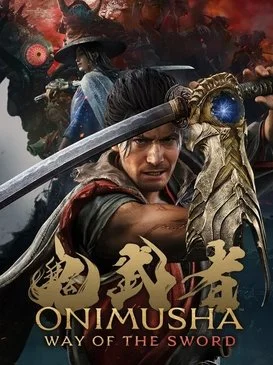
I’ve sunk about six hours into this newest Onimusha game, and as a huge fan of the original PS2 title, I’m mostly happy with how Capcom has revived the IP. It still falls under a few of the trappings of modern games such as cluttering the screen with quest markers and having an unnecessary companion solely meant to dump lore and tutorials for the players. I don’t need a companion character telling me I can’t take another hit; I’m well aware of how I’m performing in combat.
The combat feels largely good. The parry window doesn’t feel too large or too small, and deflecting enemy attacks to whittle away at their stamina is satisfying in a way that doesn’t fully pay off until you deplete your foes stamina complete and start chopping down their health. Bosses feel great to fight against and will test your reflexes with all of your abilities. But the biggest criticism of Onimusha: Way of the Sword is its difficulty. No, not that it’s too hard- it’s too easy! And honestly, I see where these complaints are coming from. When you’re in a group of standard enemies, the game does this weird thing where typically only the enemy you’re locked onto will engage you. It’s like these demonic enemies are being extremely polite and waiting their turn to get killed by the player. It also doesn’t help that they go down in just a handful of attacks. Instinctively, I felt like this was pretty faithful to the PlayStation 2 era of this franchise. As I’m writing this, I decided to pull up a playthrough of Devil May Cry 3 just to see how quickly non-boss enemies get defeated. The time to kill the enemies seems relatively close, maybe just a few more sword swings in DMC3. The real challenge of DMC3 comes from not only maintaining a high rank, but also dealing with multiple enemies attacking you at once. Whereas Way of the Sword, like I said earlier, typically doesn’t force the player to deal with one hostile enemy at a time.
I think Onimusha: Way of the Sword is missing maybe just one little extra piece of flair to make the combat truly sing. My first thought was to have the player character function more like Batman in the Arkham titles; offering the player instant flexiblity when jumping from enemy to enemy. It feels like Capcom tried to have that heavier, realistic, and lumbering feeling of the soulslike games but struggled to get the game feeling perfect when up against big groups of enemies. Certain animations like healing and recovering off of the ground feel slow, and I think they struggled balancing that slowness with a group of enemies surrounding you.
Overall, I’m greatly enjoying Onimusha’s newest game, and it seems like the game is performing well. I’m just curious how this game will be remembered. Will it go down as one of the great modern action games like Capcom’s very own DMC 5? Or will it fall to the wayside because the modern audience wants these types of games to be harder? Only time will tell.