The Tamagotchi-Era of JRPGs
There was a solid five to six years where all I played were JRPGs. These games feel like home to me. Which is why I have mixed feeling writing this piece. I’ve been reflecting on the 2020’s in terms of JRPGs. I’m currently playing through Fire Emblem Fortunes Weave, and it finally hit me in the face like a cement brick that JRPGs have dramatically changed in the past decade. There is so much time outside of battling in Fortunes Weave, that the game realizes you might feel underleveled, and gives you a way to automatically level up your characters. It took me twenty hours just to have twelve storyline battles. That’s how much dialogue and microsystem grinding there is in this game. The GBA Fire Emblems could basically be finished in twenty hours. You’d be over halfway done with Path of Radiance and Awakening. But twenty hours into Fortune’s Weave is just the beginning.
Before I get deeper into this topic, I just want to say that I am loving Fortunes Weave and I think it’s my game of the year. The music is fantastic, the story structure is actually really unique, and having four distinct heroes each with their own unique backstory and powers is super cool. But it oftentimes doesn’t feel like I’m playing a tactical role-playing game.
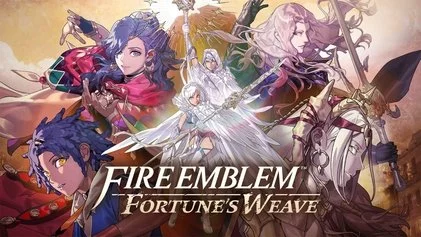
So what are you actually doing outside of battle? Fetch quests, dancing at local taverns, fetch quests, inviting NPCs out to lunch, giving them gifts, and grinding up their relationship meter in order to have them join your army, fetch quests. This “social” aspect of JRPGs really started to gain prominence with the Persona titles. And it makes a lot a sense to me why the genre took this turn. Back in the 90’s, if you really wanted a game to make you feel attached to its characters and spend a lot of time with them- JRPGs were your main genre to do so. Think of the other big genre’s of the 90s; platformers, shooters, survival horror. No other genre back in the day had such a focus on its characters. Perhaps CRPGs, but since those were stuck on PC during that era, I’m not really considering them here.
This relationship mechanic in Fire Emblem is called “Support” and it’s been in the series for decades now. So it’s unfair to say that “Persona changed Fire Emblem”. But with each new entry, this borderline life-sim or dating-sim stuff seems to increase its importance. Allow me to use a silly metaphor; a JRPG is like a cup of frozen yogurt. You put your yogurt in the cup, sprinkle on some toppings and go about your merry way. The yogurt is the core battling mechanics, which is the main aspect of these games. The toppings can be the cool characters, catchy music, and microsystems. While yes, we all love the toppings- at the end of the day, we come to the frozen yogurt place for frozen yogurt. But with each new Fire Emblem, it feels like you’re getting less and less yogurt and just a cup of toppings. Fire Emblem Awakening had the support mechanics feel so interlinked with the battling mechanics because you could team up two units to become one super powerful unit on a map. And because of the time travelling storyline, you can actually recruit your grown up children as awesome fighters. So far in Fortune’s Weave I haven’t seen much effect of the support mechanics in the battling. It just feels like the characters are artificially roadblocked by renown and relationship meters because the game isn’t feeding me main story battles very often. In older Fire Emblem titles, you’d often bump into a really cool looking NPC during a battle and would have to strategically make sure the enemies wouldn’t kill that NPC, talk to that NPC with your party leader, and then you’d recruit them. It blended recruitment with the core tactical battling the series is known for. But in Fortune’s Weave, you just feed and give gifts to these guys.
It’s not just Fire Emblem either; Yakuza, Unicorn Overlord, Final Fantasy 7 Rebirth, the Trails series, Xenoblade-
JRPGs have become dating sims for people who are too insecure to say they like playing dating sims. They get to have the comfort of saying “I’m playing an RPG!” meanwhile they’ve spent the majority of their playtime outside of battles.
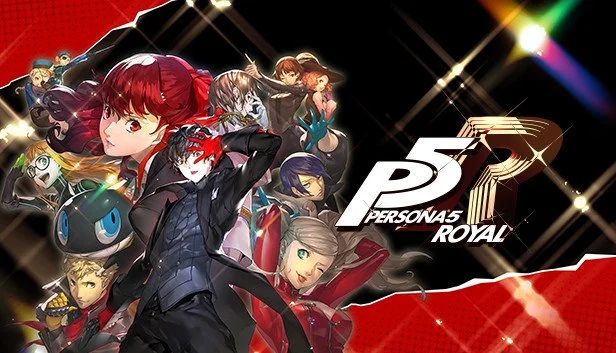
Despite existing before Persona, I think it’s fair to say that Persona (specifically 5) popularized relationship mechanics in JRPGs)
I just want to make it clear, I’m not against these mechanics. I think they’re fun ways to get more out of a games characters and feel more invested in them. But oftentimes it feels like it comes at the expense of the pacing. The reason why these newer Fire Emblem titles are nearing 100 hours is because you need to give the player time to grind up relationship meters and do the boring fetch quests. Awakening was a nice tight 40-50 hours while also still giving the player the relationship stuff, but just making it way easier and faster to grind up.
But when it gets out of hand, it feels more like I’m playing with a Tamagotchi than a role-playing game. “Gotta feed my units, gotta take my units out for a walk, gotta make sure they’re happy!” Stuff like that bogs down the pacing and tone of a JRPG. It can easily create a tonal dissonance. I’ll never forget during the dramatic climax of Final Fantasy 7 Remake when Barret asked me if we should delay saving Midgar so we could do fetch quests for the citizens like finding a lost cat. Yes Barret…let’s allow Sephiroth to take over the world so we can find a lost cat. Not every game needs to go this Persona-style route. I know I’m being unfair to Persona by pointing my finger at it, especially because the first time I played 4 on my PS2 I was blown away. But honestly, I’d much rather have a canonical romance and friendships than player driven ones. For all my diehard JRPG fans out there, let me ask you a question:
Which romance hits harder for you, Tidus and Yuna, or your last Persona romance?
Justin and Feena, or your last Persona romance?
For me, it’s Tidus and Yuna. Justin and Feena any day of the week. And the same goes for platonic relationships as well.
I fear the day Square Enix remakes Chrono Trigger into a seven part game, but it’s going to happen. And in that remake there’s going to be a relationship mechanic. But the original Chrono Trigger didn’t need that because it brilliantly shows the player all of the relationships within its brisk 25-30 hour story. Lucca is Cronos childhood best friend. Lucca has a deep bond with Robo. Marle and Crono like each other. Frog and Magus can’t get along but both share the fact that they’re haunted by the past. Stuff like that is so natural in its tight writing, and the player doesn’t have to grind any boring stuff to get to it. I think the reason why so many newer JRPG fans have trouble going back to the classics and dealing with aspects like random encounters and getting lost is because they’re hit with the harsh reality that the foundation of a JRPG is its battling mechanics. That’s what you spent the majority of your time doing in these older JRPGs- battling. An older JRPG dungeon would genuinely be a maze, forcing the player into dozens of random battles- ensuring that they’re a high enough level to take on the dungeons boss at the end. And a modern JRPG dungeon typically has a minimap in the corner of the screen and quest markers leading the player to the exit, which allows them to minimize the amount of battles they take on and causes them to be underlevelled. Older JRPGs were mostly frozen yogurt with just a few toppings sprinkled on it. And it seems like today most people care more about the toppings.